

Interview with Victoria Harrison of The Solstice Yearbook!
We sat Victoria down to discuss all things rewilding - learn how she finds inspiration to connect with the seasons, where she has gathered the rich folklore of The Solstice Yearbook from and more.


When did you become so passionate about seasonal living, and what inspired that passion?
I’ve always enjoyed being connected to the natural world, and when I was researching my previous book, Rewild Your Home, I completely immersed myself in finding ways to live a life more wild and introduce nature to the everyday.
My Substack, Seasonal Living with Victoria Harrison, was born from that passion and I’ve been writing about it ever since. It’s become central to everything I do.
Where do you get inspiration from when looking to connect with the seasons and live wildly?
I make myself go outside! When I was researching Rewild Your Home, I discovered that we spend, on average, 90% of our time indoors these days. That’s terrifying! So getting outside as much as possible is important. But there are also loads of great ways to invite nature and the seasons into your home too.
In my house I’ve tried to blur the boundaries between inside and out as much as possible. I have skylights to allow me to see the sky in all seasons and I’ve filled the tiny garden with trees to green the view from every window. My son and I also often bring treasure home from our walks, emptying out seeds, flowers and leaves from our pockets onto various surfaces and making little displays; literally bringing the outside in.
Children are often very connected to, and aware of, the natural world, so it’s always worth following their lead and trying to see the world through their eyes. When my son was tiny he was fascinated with the moon so I bought him a moon clock, which tells the time in moon phases rather than hours and minutes. It takes a full month to complete one cycle so it’s completely useless for leaving the house on time but there’s something very magical about it and we both check it daily now. In fact, he learnt to tell what phase the moon was in before he could tell the time, which pleased me hugely.
What’s one aspect of seasonal living that people don’t expect?
How joyful it is. It’s pure fun. There’s something fresh to discover and celebrate each month, from festivals and rituals to moon phases and seasonal cakes.
Where do you start when planning ways to celebrate the Solstices and Equinoxes?
The two Solstices each have their own distinct character which makes it quite easy to plan how to celebrate them.
The Summer Solstice is the lightest, brightest day of the year, filled with solar power and high energy and it feels totally right to spend the day outdoors, drinking in the sun, harvesting herbs and flowers and celebrating with friends. It's a big, bright, joyful and outgoing day.
In total contrast, the Winter Solstice is the shortest, darkest day of the year, so energetically it feels very slow, quiet and cosy. It makes sense to celebrate it in a slower way, with cosy rituals like lighting candles and fires, eating warming foods, bringing evergreens in and quietly encouraging the return of the sun.
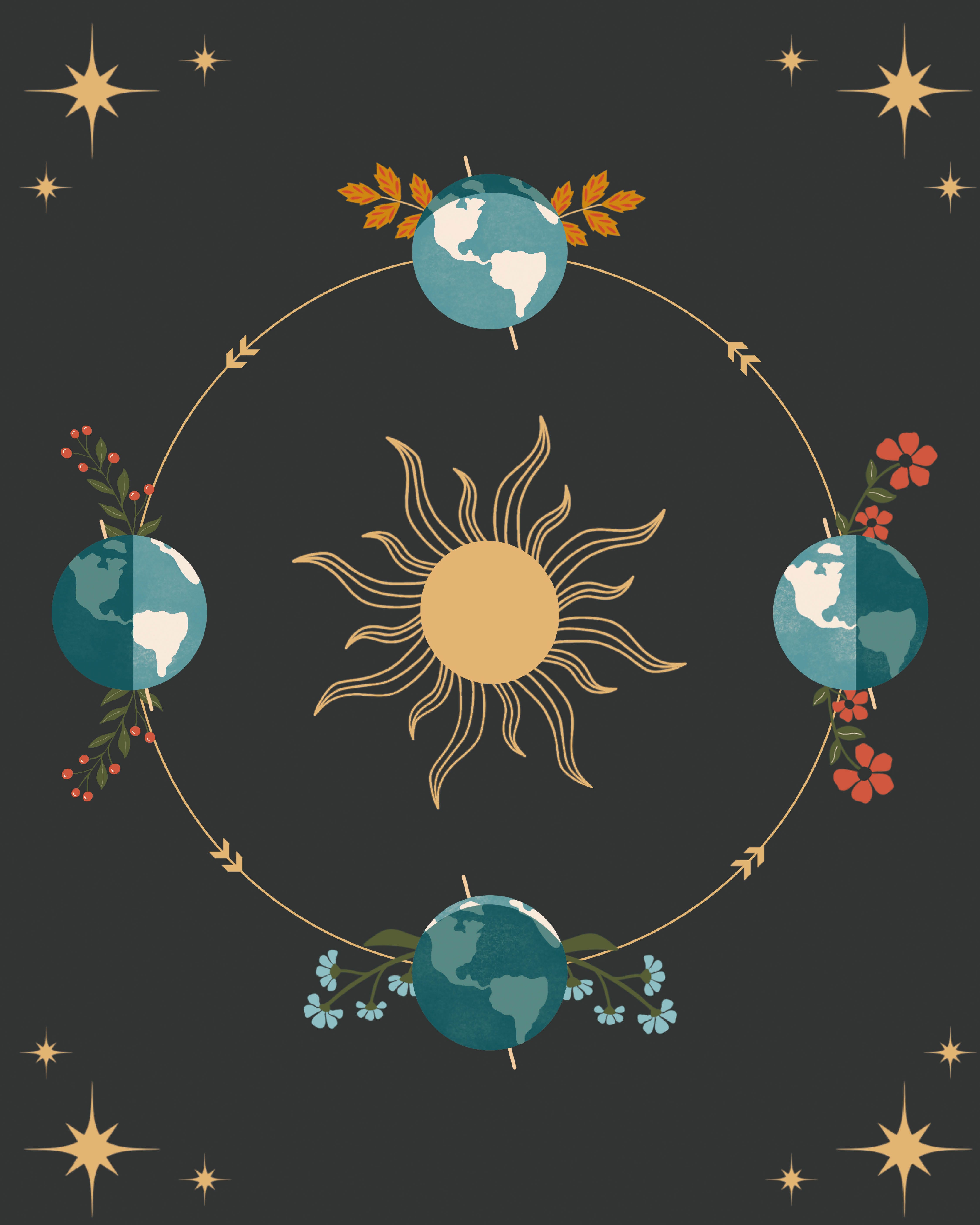
And then the Equinoxes have their own very distinct character too. They are the only two days in the year when the hours of light and dark are perfectly balanced, so they have a steady, calm energy. Each one feels like a little pause in which to take a breath and regroup. The Spring Equinox naturally lends itself to making plans for the coming summer, while the Autumn Equinox is the perfect time to look back on the Summer and reflect.
Do you have any future plans for your seasonal lifestyle, or do you feel you’ve achieved balance?
There’s always more to discover! Each time the wheel turns from one season to the next I discover new ways to celebrate and share the joy of it.
How big of a role does ancient folklore play in your everyday life as you live with the seasons?
It’s my favourite thing about it. Folklore gives us a fascinating window into an agricultural past where we were much more closely connected to the land and the seasons, and calendar dates were marked with rituals, rhymes and traditions. While some of these markers might be a little out of sync now, due to the changing climate, it still gives us a framework to look at and consider how we might adapt it for modern life. It’s a valuable thread back into the past.
That said, folklore has always been a living, evolving thing, changing and shifting as it’s passed on from one person to another, so I strongly believe we should be finding ways to interpret folk stories and traditions in a way that makes sense today. And of course, we can start our own stories and traditions for future generations. I’m really enjoying the current resurgence of interest in all things folklore and seasonal and I look forward to seeing how it evolves.
Where do you gather all of your folklore from? Has it been passed down, or do you carry out research in specific places?
I grew up in a very rural, agricultural part of the UK; one of those pockets of wild landscape where the past feels very tangible, alongside the present day. Our village celebrated many of the old seasonal festivals, from May Queens and Maypole dancing, to harvest festivals and conker championships. Many of these rituals and traditions have stayed with me and I love the idea of helping to pass them along.
I also love to collect random and obscure folklore books. The older and weirder the better! And I have a big collection of traditional, regional cookbooks from around the UK and Ireland; these often have seasonal recipes that give a clue of how different regions celebrated folklore dates in the past. I’m not an historian, but I am inherently curious, which is what drives me to keep digging and keep looking for new material and new sources.
Since starting my newsletter community I’ve also found that readers will respond to my newsletters each month with their own folklore rituals and practices and it’s brilliant to discover new gems that way. The resurgence in the UK of Orchard Wassailing for example, makes me very happy!
How was the concept of The Solstice Yearbook born?
The more I wrote about seasonal living the more I realised that, in its purest form, it can be summed up as the practice of following the sun. I wanted to write a book that clearly laid out how to best do this, shaping the course of a year around the four big solar events; the Solstices and Equinoxes.
As I mentioned above, each of the festivals has their own very unique ‘flavour’ and they form an excellent framework to shape the year around. We are all still solar-powered creatures, whether we realise it or not, so the book shows us how to harness and celebrate that. It’s a love letter to the sun!
What was it like writing the book; was there anything unexpected about the experience, or anything that was a pleasant surprise?
It was lovely to be able to pull together all the ideas I’d been gathering and have somewhere to consolidate and expand on them. I hadn’t worked on such a heavily illustrated book before, so I loved this part of the experience. Seeing the illustrations Lauren Spooner created for each of the chapters really added something extra and beautiful to the book.
If readers could take just one thing from The Solstice Yearbook, what would you want that to be?
Seasonal living is a joyful, fun experience that will enrich your day to day life. It doesn’t have to be complicated and there are no hard and fast rules. Just keep your eyes open and follow the cues the natural world gives you. You’ll enjoy it.
How do you feel as we rapidly approach the book’s release?
Really excited to see it out on shelves, and ready to start the next one!
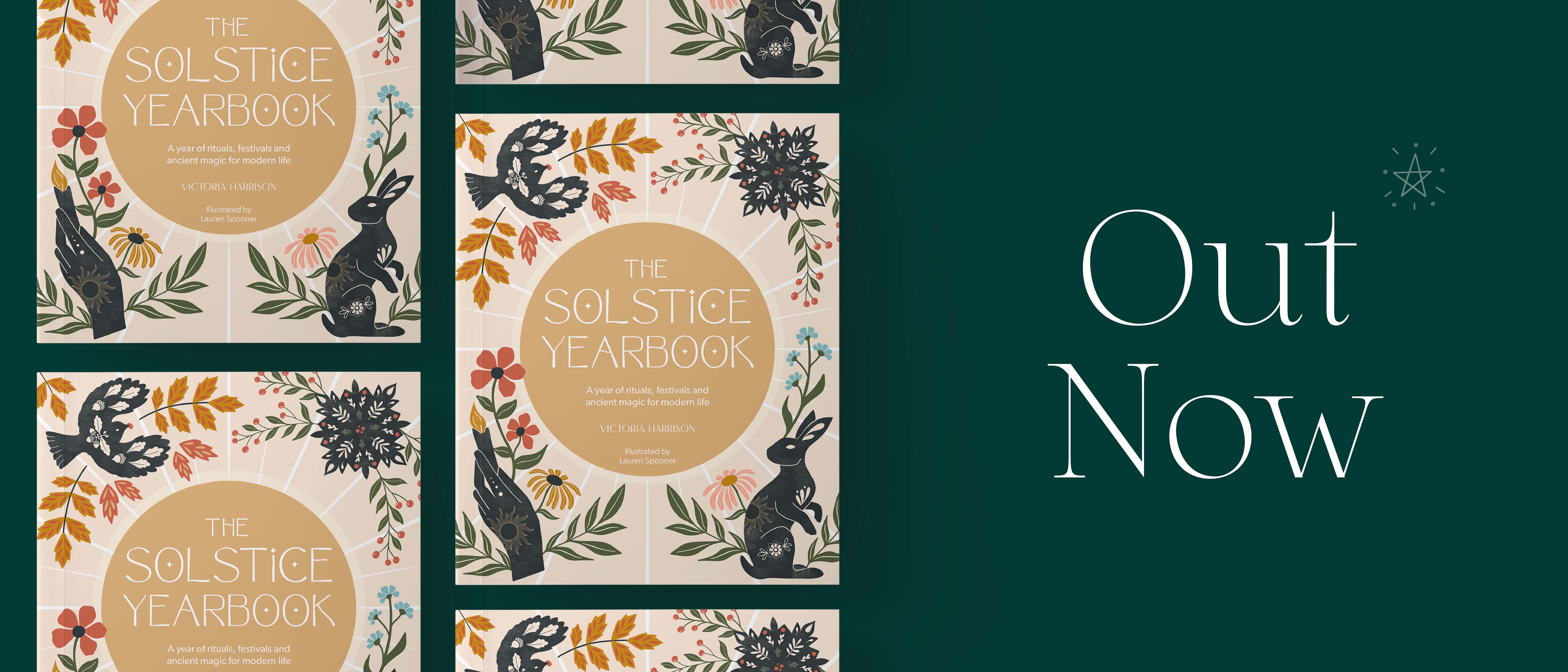
The Solstice Yearbook is out now! Kickstart your new seasonal lifestyle by ordering this wonderful title today at the link here.
 | A guest post by
|
A great insight into this delightful book and the authors thoughts as she lives her joyful, seasonal life.👏🙏💚🍂